+1 (415) 909-4940 contact@offmap.co.uk

The Proper Groundwork Year

Ten months laying the foundation for independence and confidence. Swordsmanship from an iaido master in Japan. Cooking in a Tuscan farmhouse. Retreat practice in Thailand with guided meditation and monastery visits. Northern lights in Finland. Masters who guide you from depth of experience, and a cohort growing alongside you.

Participants may fail sometimes, and they are given the opportunity to fix things themselves, with support close enough to catch a real fall but far enough away that the success belongs to them.

September 1, 2026 – June 11, 2027

Group Size
5-15
Ages
18-28
Cost
$97k
per person
The Proper Groundwork Year

The Name Means What It Says

Proper. Groundwork.

Most programs for autistic young adults start from a blunt assumption: something in you is broken, and their job is to fix it.

Social skills training. Life skills coaching. Transition planning. The language is gentle, the expectations are managed, and the implicit promise is that the person will learn to function well enough.

We find that an extraordinarily small thing to promise someone.

The Proper Groundwork Year is not the autistic version of a gap year, and it is not travel for travel's sake. We built it from lived experience as autistic young adults ourselves, so we know this terrain from the inside.

It leads us to this: no one knows what you're capable of, because no one ever let you try. Not "rise to your potential" - no one ever believed you could, so they never gave you the chance.

This program is built from that understanding. The scaffolding is real. The support is real. This is not a watered-down itinerary or baby's first abroad. It is the real thing: iaido with a sensei who has spent decades mastering the sword, deep contemplative practice and nervous-system training in Thailand, and cooking in a Tuscan farmhouse with people who have given their lives to the craft of Itaian food.

We accommodate as needed, and we refuse to infantilize. We respect you as a person with depth and capacity, and we build the capability to meet real standards.

Proper.

A word with weight. It means done right. Not approximately, not partially, not the watered-down version that passes for "realistic expectations."

Proper is our sequence and our standard. You do not build a life by guessing the order, skipping the base, and hoping it somehow holds. You lay foundations first, then build on top of them.

It also carries warmth. A proper cup of tea is not just adequate tea. It is tea made with care, by someone who understands why details matter. That is the standard we hold ourselves to, and the standard we hold every participant to. Precision and care belong together.

Groundwork.

This word works in two directions at once, and we mean both of them.

The literal ground. Soil, stone, snow, sand. Temple steps in Thailand. A farmhouse kitchen in Montalcino, Italy. Japanese mountain earth. Finnish forest in subzero air.

This is not metaphor. The groundwork is ground work. Real places, real textures, real sensory encounters with the physical world across eight countries and ten months.

And the foundational. This is the second meaning of "groundwork" - the preparation that must be laid before anything else can hold.

Most support for autistic young adults does not build in sequence. There is no deliberate base layer, no coherent progression, and no proper strategy for what gets built first and why. People start building from the middle and hope it works.

They also do most of it outside real life. Training happens in protected rooms, then everyone is surprised when it does not transfer to jobs, kitchens, deadlines, or new environments.

Readiness fails when foundation is treated as optional. We lay it properly, in order, and in the world where adult life actually happens.

That's what this year is.

Ten months of real foundation, laid properly, in the real world.

Fifteen autistic young adults, aged 18 to 28. Seven travel legs across eight countries: Austin, Thailand, Japan, Poland, Finnish Lapland, Italy, Fiji. Home periods between each one.

Weekly one-to-one coaching with Danny Raede, who has been helping young adults on the Autism spectrum for 15 years, throughout the program. Masters woven into every leg. Real projects shipped to real deadlines, with a portfolio of six to eight completed works by June.

Not a simulation of independence. Not a sheltered rehearsal. Not managed expectations dressed up in adventure language.

The real thing, done properly.

The sections that follow explain why this works, starting with what neuroscience actually tells us about how autistic people process the world, and why that understanding changes everything about how you design a program.

Autism Is a Prediction Difference, Not a Deficit

Your brain is a prediction machine.

Right now, as you read this, your brain is predicting the next word before your eyes reach it. It predicts what a doorknob will feel like before you touch it, whether someone's voice is warming up or tightening before they finish their sentence, the temperature of the coffee before you sip it. Every second of every day, your brain runs predictions about what's coming next, then checks those predictions against what actually happens.

When a prediction matches reality, your nervous system stays calm. Nothing to report. When a prediction doesn't match, you get what neuroscientists call a prediction error. Prediction errors are useful. They're how you learn. But they cost energy, and each one registers in the body as a small jolt of uncertainty.

Your brain builds predictions from experience. Every time you've successfully navigated a grocery store, your brain files that away and uses it next time. These stored patterns are called priors. Think of them as your brain's reference library. The more priors you have for a situation, the better your predictions, and the calmer your nervous system stays while you're in it.

Autistic people build priors differently. The reference library fills in a different pattern: deep and specialised where attention goes, thinner in areas that haven't been given enough repetition. Where a typical person files away "this is roughly how grocery stores work" after a handful of visits, an autistic person may need more encounters before building that same level of prediction confidence.

Most programs treat that difference as a deficit. Social skills training, behavior modification, coping strategies: all built on the assumption that the person is lacking something and needs to be corrected toward normal. Think of it like handing right-handed scissors to a left-handed person and then offering them "cutting skills training" when they struggle. The problem was never the person. It was the mismatch between the tool and the hand.

The intense focus that gets labeled "special interest" or "hyperfixation" is the prediction engine doing exactly what it's designed to do: going deep, building strong priors, mastering a domain thoroughly before moving on. The question isn't how to make the brain more normal, It's how to give it what it actually needs: enough real-world repetition, across enough variety, that the reference library fills in on its own terms.

This is where most programmes get it backwards. They try to teach confidence in a controlled room and hope it transfers later. It rarely does. Priors are context-bound at first. They only become flexible after repeated contact with real environments.

That is why masters matter, and why travel matters in a specific order. An iaido sensei builds precision, breath control, and composure under pressure. A somatic practitioner gives direct regulation tools for moments of overload. In a Tuscan farmhouse kitchen, social timing and sensory processing are trained while hands are busy and stakes are real. Each leg builds priors in one domain, then the next leg forces those priors to transfer under new conditions.

So eight countries over ten months is not "travel for character." It is a structured prediction curriculum in the real world: scaffold, exposure, transfer, repeat. Not to fix anyone, but to build the reference library that adult life actually requires.

The Missing Passage

For most of human history, every culture had a structured passage from adolescence into adulthood. A designed threshold. An ordeal that was expected, witnessed, and survived. You went in as a child and came out as someone who had proven, to yourself and your community, that you could handle the world.

Modern life stripped all of that away. There's no sanctioned crossing anymore, no designed challenge, no communal recognition that someone has passed through something hard and arrived on the other side. For neurotypical young people, this absence is a real problem. For autistic young adults, it's closer to catastrophic.

Autistic people need more structured transitions, not fewer. The prediction engine that runs every nervous system relies on clear signals: what's changing, what's expected, what the new environment requires. Most people can piece those signals together from context clues and social osmosis. Autistic people need the transition to be explicit, designed, and scaffolded enough that the prediction engine can recalibrate without flooding.

Without a structured passage, the transition to adulthood becomes a slow, unscaffolded drift. Nothing marks the change. Nothing signals "now the expectations are different." The old routines and supports quietly thin out, and the young person is left to figure out the shift through trial and error in environments that were never designed to teach them anything. Each accidental failure carries weight, because there's no frame that says "this difficulty is part of the process." It just feels like falling behind.

Imagine walking down an unfamiliar street in a foreign city. A typical brain has already predicted most of what it will encounter: roughly how loud it will be, how people will move, what the traffic pattern is. Those predictions compress the incoming data. The nervous system stays calm because almost nothing is a surprise.

Now imagine that same street with a thinner prediction set. Every car horn is unfiltered. Every passing stranger is unpredicted. The smell from the restaurant hits without context.

None of this is dangerous. But each one registers as a prediction error, and each error sends an uncertainty signal to the nervous system. That's sensory overload. That's the exhaustion after a social event. That's the meltdown in the unfamiliar restaurant. The nervous system is responding to a genuine flood of uncertainty, because the prediction engine is generating more errors than it can comfortably process.

The answer is not to avoid those environments. It's to enter them deliberately, with support, inside a structure where challenge is expected and difficulty is the point.

Ten months. Eight countries. Each leg a new threshold, with clear beginnings and endings. Staff who walk participants through each transition.

Intensity that is designed, not accidental. This is an initiatory passage: a structured crossing into adulthood, built for the people that need that structure most.

We call it the Proper Groundwork Year because that's what it is. The real foundation, laid properly, in the real world.

The Shame That Blocks Learning

By this point, we need to name something directly. The shutdowns, meltdowns, and freeze moments are not evidence of bad character. They are stress responses from a system under real load.

Regulation tools help. Breath work, body-based grounding, and sensory recovery can lower load in the moment and keep someone online. We use those tools throughout the programme, because they matter.

But regulation on its own does not solve the full problem. If a young person keeps entering high-uncertainty situations with too little lived reference, the same overload pattern returns. The reaction changes for a while, then snaps back under pressure.

There is another force in play, and it is often the one that blocks learning most effectively: shame. When you are the only autistic person in the room, every social miss can feel personal. Every difficult moment can feel like public proof that you are the problem.

That is why many young adults work incredibly hard and still feel stuck. They are not avoiding effort. They are trying to learn inside an environment where getting it wrong carries social threat. In that state, people protect themselves first and learn second.

Change the context, and the learning dynamics change with it. Put fifteen autistic young adults together, in real places, doing demanding things, and the same hard moments are no longer private evidence of failure. They become shared experience.

Nobody is the only one who missed the cue. Nobody is the only one who needed ten quiet minutes after a crowded station. The pressure to perform normal drops, and the capacity to stay engaged rises.

This is not a soft emotional extra. It is a core learning mechanism. When shame decreases, people remain in contact with challenge long enough for real-world pattern recognition to build.

That is why The Proper Groundwork Year combines both tracks by design: regulation practices that keep the system online, and a peer environment that removes the shame barrier so growth can compound. One without the other is usually not enough.

Five Things That Actually Work

Priors build through experience. Specifically, through repeated successful encounters with the thing. You navigate the grocery store and it goes fine. Your brain files that. You do it again and it goes fine again. The prior gets stronger. Eventually, your brain predicts the grocery store well enough that your nervous system barely reacts. But if every trip ends in overwhelm and shutdown, the brain doesn't build a prior for "grocery stores are manageable." It builds one for "grocery stores are threatening." The encounter needs to go well for the person to encode it as a completed prediction cycle.

Five things make that possible:

Build priors through scaffolded repetition. Real environments, real challenge, real prediction demand, but with enough support that the encounters succeed. The brain gets what it needs: hundreds of completed prediction cycles, filed away as priors, across an enormous range of situations. Not simulated in a classroom. Lived in diverse environments across the world.

Remove the shame tax. When getting something wrong feels dangerous, the prediction engine stalls. It can't update from an experience wrapped in threat. A peer group of 15 autistic young adults, all navigating the same unfamiliar world, makes prediction failure safe. Expected, even. Misreading a social cue in Italy isn't a personal failing when everyone at the table misread the same cue. The engine restarts because the shame is gone.

Provide explicit predictive models. Not behavior rules ("make eye contact") but predictive frameworks ("here's how Italian greetings work, here's the rhythm, here's what to expect"). This gives the brain something to predict with before the experience starts, lowering the error rate from the first encounter. The brain isn't walking in blind. It has a map, even if the map is rough.

Regulate to keep the engine online. Vagal work, somatic practice, breath work, mindfulness. Not as the destination, but as the bridge. You regulate so the prediction engine stays online long enough to learn. Then the learning itself reduces the need for regulation. The nervous system calms down because there's less demand to respond to.

Build agency through self-authorship. Agency isn't a luxury. It's a biological nutrient. Research on learned helplessness shows that passivity is the default state: agency has to be actively built through experience. For autistic people, whose sense of agency is measurably weaker after years of demanded compliance and adult-directed schedules, every choice that leads to a real outcome strengthens the sense of self. Every time someone else makes the decision for them, it erodes. The Proper Groundwork Year is designed around agency at every level. Participants choose their own projects, plan the capstone leg independently, and have the ability to navigate foreign cities on their own by the end of each leg. The home periods between legs are where agency crystallizes into proof: shipped projects, portfolio work, evidence that they can author their own lives.

This is where most approaches fall short. Therapy offices can explain how the world works, but they can't provide the experience of it. Social skills groups can rehearse conversations, but they can't replicate the prediction demand of actual social life in actual places. Unsupported exposure without scaffolding just generates more failed predictions and makes things worse.

The Proper Groundwork Year is ten months of scaffolded, real-world experience across eight countries, inside a peer group that removes the shame, with regulation support to keep the engine running, explicit models to lower the initial error rate, and a design that puts the participant's own choices at the center of every leg.
All five, together. That's how the reference library fills in and the young person who built it gets to own it.

How It Works

Seven legs across eight countries, with home periods between each one. Each leg teaches something different. Austin starts familiar and English-speaking. Thailand opens the senses and closes with stillness. Japan in autumn demands craft and precision amid the koyo foliage. Poland and Lapland build physical confidence through cold mastery. Italy brings social warmth and long meals. Then Fiji strips everything back: three weeks of village life on a remote island as the final integration before the capstone. Each destination builds on what came before.

During each leg, masters join the group. An iaido sensei in rural Japan. A meditation practitioner and monastic teachers during the Thailand retreat. Alessandro and Manu at their farm kitchen in Montalcino. Sometimes the master travels to meet the group. Sometimes the group travels to the master's home ground.

Every leg is fully supported. Staff walk participants through unfamiliar environments on day one: how the transit works, what to expect at a restaurant, how people greet each other here. By the end of the leg, participants are able to navigate independently. The same street that felt new on arrival becomes routine. That's the prediction engine building real, tested entries in its library.

Getting things wrong abroad doesn't carry the same shame it does at home. Misreading a social cue in Italy isn't failure. Everyone gets things wrong in a foreign country. That removes the shame that usually blocks learning and lets the brain file new experiences without the anxiety tax.

The home periods between legs are not breaks. Each one includes weekly 1:1 coaching with Danny Raede, weekly Show & Tell calls with the cohort, and real project work.

Participants pick a project that serves someone other than themselves, announce a deadline to the group, and ship it. Coding, writing, art, design, research, freelance work, open source contributions—the form is up to them.

The accountability is relational: the cohort watches every Friday, and the masters from each trip are expecting preparation before the next one.

By June, every participant has a portfolio of 6 to 8 shipped projects they can point to and say: I did that.

By June, a participant who started in September bracing against unfamiliar situations has ten months of real-world experience across eight countries and a portfolio of shipped work.

They've navigated transit systems, read social cues in multiple cultures, ordered food in languages they don't speak, handled the unexpected hundreds of times, and produced real projects with real deadlines for real audiences.

The reference library their brain was missing now has real, lived entries in it. And the portfolio proves it to anyone who asks.

The Masters

Every leg includes time with someone who has spent their life mastering a discipline. An iaido (essentially modern samurai) sensei in rural Japan. Alessandro and Manu in Montalcino. Somatic practitioners, cultural elders, craftspeople.

Sometimes the masters travel to meet the group. Sometimes the group travels to the master's home ground. Both directions matter.

The masters aren't guest speakers dropping in for an afternoon. They spend days with the group. They teach by doing. They expect preparation. Hide Sensei expects you to have practiced your breathing before you arrive. Alessandro and Manu expect you to have been cooking at home. The accountability is personal, not institutional. You do the work because someone you respect is expecting you to.

Hideyuki Yoshizuka Sensei, iaido master

Hideyuki Yoshizuka Sensei

Iaido · Japan

Japanese swordsmanship. Precision, breath control, presence. Hide Sensei travels to Austin to introduce iaido in the first leg, then the group meets him again on his home ground in Japan for the final intensive. Two encounters with the same master, months apart, in completely different contexts.

Eva Angvert

Eva Angvert

Anxiety, Fear & Overwhelm · San Francisco, CA

Somatic Experiencing practitioner and Emotional Resolution specialist. Eva helps people move through anxiety, fear, and overwhelm at the body level. She works with the group on zoom initially, establishing the tools that participants carry through every subsequent leg, and then meets them in Thailand to go deep.

Demetra Società Agricola Semplice, Montalcino

Alessandro & Manu

Cooking · Montalcino, Tuscany, Italy

Alessandro and Manu from Demetra Cooking School travel from Tuscany to Austin to cook with the group in the first leg. Months later, the group travels to their farm kitchen in the Tuscan hills for a multi-day immersion. Knife work, pasta, local ingredients, long meals together. One of the most social environments in the entire program.

Danny Raede

Danny Raede

Autistic Life · London, England

Danny Raede is an autistic founder and practitioner with 15 years of field experience helping autistic young adults and families build real-world capability. His work has reached more than 450,000 people through coaching, programmes, and educational content. He teaches agency, regulation, and executive functioning skills in live environments, direct from his personal and professional experience.

Join The Proper Groundwork Year

Eight countries. Real projects. A portfolio when you're done.

Dates

Sep 1, 2026 – Jun 11, 2027

Countries

8 Countries

Cost

$97,000

With group flights: $107,000 total

Apply for The Proper Groundwork Year
Danny Raede
Your Guide

Danny Raede

Danny Raede was diagnosed with Asperger's and ADHD at age 12. He went on to build Autism Experts (originally Asperger Experts) into the world's largest training and coaching organization for families on the autism spectrum, working with thousands of families over 14 years.

Along the way he co-founded WanderRock Travel, taking neurodivergent young adults on immersive international trips. He's personally led groups through Japan, Italy, Thailand, Germany, and more. 19 countries across 5 continents so far, and he's still looking for good Mexican food in most of them.

He left Autism Experts to found Offmap and moved to London to focus on what he'd spent his whole career circling back to: helping autistic people build real confidence through real experience, not worksheets and social skills groups. The Proper Groundwork Year is the fullest version of that work. He coaches every participant weekly throughout the full ten months.

In Partnership with WanderRock Travel

The travel legs are designed and operated by WanderRock Travel, Danny's neurodivergent travel company. WanderRock leads all-inclusive international small group adventures for neurodiverse young adults, and has been featured in the Boston Globe and Thrillist.

350+

Travelers to Date

0

Serious Safety Incidents. Ever.

25%

Return Rate

2020

Founded

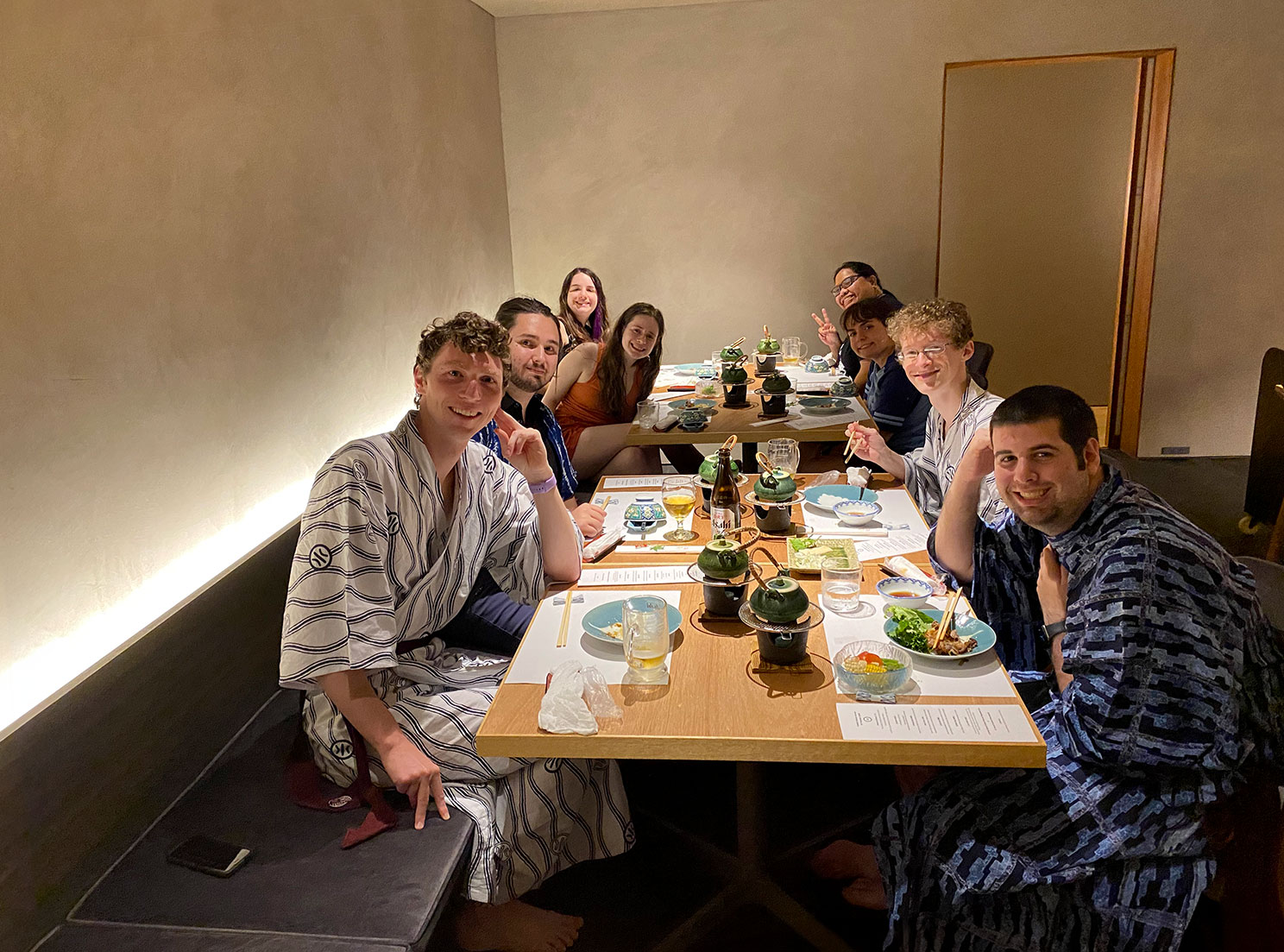
Traditional Japanese Dinner

For neurodiverse young adults, traveling with peers can mean the world

"Guides are skilled in leading tours and promoting self-confidence while traveling. Kempf explains that these are groups "comprised of young adults that recognize and accept each other as true peers." He adds that "WanderRock creates unique spaces and life-enriching experiences for those that want to safely step into the unknown."'
Read Full Article
Samurai Training

This Pioneering Tour Company Designs Trips for Neurodiverse Young Adults

"Kempf and Raede, along with their team of trusted tour guides, have put careful thought into every aspect of each trip. Choosing simple and predictable accommodations means travelers have a safe place to recharge, for example. "The support is the curation," says Kempf."
Read Full Article

Featured Video

See the WanderRock Experience

A direct look at the environments, standards, and moments that make this work real.

What Past Travelers Say

"This trip to Japan was a masterpiece of an itinerary which provided something that blew me away every single day. Thanks to all of you for caring about me as a person, putting your best foot forward to insure my happiness and giving me experiences unlike anything else that I had ever seen or done."

Will
Will Slocum
Pasadena, California

"Unbelievable. I use that word a lot because that describes most of the trip to Europe. It was just unbelievable.

My family goes on vacation about once or twice a year, and I've been suggesting Europe up for as long as I can remember, and we've never gone. I never really was confident that I'd be Self-sufficient enough to make it over on my own. And now having gone, it's it was just as amazing as I'd always imagined."

Wyatt
Wyatt Dunkerly
Novato, California

"All the guides were super helpful and friendly and always willing to answer any questions we had on the trip. It was my first time traveling abroad without my parents. My favorite part was Kinosaki I loved the onsens and it was so relaxing and therapeutic.

I also loved all the different foods, I got to try and experience for the first time. It definitely brought out my confidence in myself I know I can do anything I set my mind to. My biggest lesson I learned is that I need to listen to my body whether it be mentally or physically. I also learned that I can travel on my own. I just need to trust myself."

Nora
Nora Lewis
Concord, California

"With my trip with WanderRock to Japan I experienced a sense of inner peace and silence even with autism that I had never had before in my life. I learned to see what's in front of me rather than trying to prepare for the next cataclysmic event that was going to be stressful to me. In my opinion, I was given the right amount of freedom to make my own decisions and the right amount of rules and control to not feel overwhelmed.

Help or support was never far away from me on any of the other individuals traveling with me. I'm the kind of person that struggles making any plans without planning it to death. This was the freedom and safety I needed to truly experience and jump right in. The connections and opportunities I was able to be apart of on my trip in Japan was nothing less then stunning."

Remington
Remington Shindel
Monument, Colorado

"The trip I took to Japan with WanderRock was one of the best experiences of my life, I was able to make so many new friends that have similar struggles to me which was so exciting. The guides were great enabling us to experience a new culture which might otherwise be overwhelming, and in a way that made us feel comfortable."

Michael
Michael Forbes
DuPont, Washington

"I've always had low self-confidence, and never really held any belief in my capabilities. All of that changed after this trip. This trip gave me a peace of mind about myself I'd never known. I learned what I was capable of when put in an environment that fosters growth and learning, and found a place I felt like I belonged.

I found a new sense of confidence in myself that I don't know if I would've found without going on a trip with WanderRock. If you're on the fence about taking this trip, I highly recommend going out of your comfort zone for it. This trip changed my life for the better, and I'm sure it can change yours too if you let it."

Len
Len Lawler
Millersville, Maryland

Offmap leads the coaching, curriculum, and personal development. WanderRock brings proven travel expertise, on-the-ground logistics, and a track record of keeping neurodivergent travelers safe, supported, and challenged in all the right ways.

Why the Home Periods Matter Most

A person who hasn't produced anything in years has no evidence they can affect the world. Their choices don't seem to lead to outcomes. They've forgotten the thing that sits on the other side of effort: someone else using what you made.

Most people absorb a story about work early: it's the thing you endure so you can enjoy the rest of your life. You push through. You grind. You earn the weekend. For autistic young adults who already face more friction in typical workplaces, that story becomes a trap. If work is suffering, and work is already harder for you, the logical move is to avoid it. So they do. And then something worse than frustration happens. They stop making anything at all.

Making something is not drudgery. It is one of the best feelings available to a human being. You built a thing. It did not exist before. Now someone else benefits from it. That is not the opposite of play. For most people who actually love their work, it is the play.

During the home periods, participants pick a project, announce a deadline to the cohort, and ship something real. A Python script that automates their parent's invoicing. A Substack about a special interest. A commissioned logo for a local business. The form does not matter. The cycle does: choose, build, ship, watch someone use it.

Every completed project rewrites the story. Not "work is something I survive" but "work is something I'm good at and it changes things." Six to eight times over ten months, that cycle runs. By the end, the old story doesn't hold up anymore. The evidence against it is sitting in a portfolio.

Teaching Agency

Agency is not a personality trait. It is not something you either have or you don't. Agency is what happens when a person makes a choice, watches it produce a result, and files that away as evidence: I can affect things.

Most autistic young adults have spent years in environments that made their choices for them. Adults picked the schedule. Therapists picked the goals. Schools picked the curriculum. The message, delivered through structure rather than words, was clear: other people decide, and you comply. After enough years of that, the muscle atrophies. Not because the capacity was never there. Because it was never exercised.

You rebuild it the same way you built it in the first place: by doing things and watching them work. Not simulated choices in a controlled setting. Real ones, with real stakes, in real places. Navigating a train system in a city where you don't speak the language. Ordering food when the menu is unfamiliar. Choosing which project to build and then building it while a group of peers watches your progress every Friday.

The Proper Groundwork Year is designed around this at every level. Participants don't follow a script. They navigate. They choose. They fail sometimes, and they fix it themselves, with support close enough to catch a real fall but far enough away that the success belongs to them.

By month ten, a participant who arrived unsure whether they could handle a grocery store alone has navigated eight countries, shipped a portfolio of real work, and made hundreds of decisions that produced real outcomes. The agency isn't theoretical. It's sitting in their nervous system, backed by ten months of evidence that their choices matter and their effort changes things.

The Curriculum

Travel legs inject new experience. Home periods turn it into something durable. The output is a portfolio of real work.

WanderRock group with Hideyuki Yoshizuka Sensei
On the Road

What Happens During Travel Legs

  • Masters. Every leg includes time with someone who has spent their life mastering a discipline. They teach by doing, not lecturing. They spend days with the group. They expect preparation.
  • Guided experiences. Staff walk participants through unfamiliar environments on day one: how the transit works, what to expect at a restaurant, how people greet each other here.
  • Executive function and social capability. Participants strengthen planning, follow-through, decision-making, and self-management, while also building practical social skills in real environments. The work is structured, supported, and immediately applied to daily life.
WanderRock group
At Home

What Happens During Home Periods

  • Weekly 1:1 coaching with Danny Raede. Not therapy. Practical coaching focused on life skills, executive functioning, self-awareness, and decision-making. What is happening in your life right now, what is getting in the way, and what is the next concrete move?
  • Weekly Show & Tell. Every Friday the cohort meets on video. Everyone shares what they shipped or moved forward. The group witnesses output.
  • Project work. Pick a project that serves someone else. Announce a deadline. Ship it. Coding, writing, art, design, research, freelance work. One meaningful project per home period.
  • Pre-trip preparation. Before Thailand: daily mindfulness practice. Before Japan: iaido stance work. Before Poland: cold shower practice and WHM breathing. Before Tuscany: knife skills at home. The masters are expecting you to have started.
Kinosaki dinner with WanderRock
The Output

A Portfolio of 6-8 Shipped Projects

By June, every participant has a portfolio of real work they can point to and say: I did that.

  • Every project must be for someone other than yourself
  • Every project must ship, not stay "in progress" forever
  • Every project has a deadline, announced to the cohort
  • Built software, published writing, freelance deliverables, creative work with an audience. The form is up to them.

Not a certificate. Evidence. "Here's what I did" beats "here's what I learned" in every interview and every life transition.

"Hide Sensei asked you to practice your breathing before you see him again in Japan. The family in Tuscany wants to see your knife work. Your cohort is watching on Friday. What will you show them?"
The Model

Relational Accountability

No grades. No certificates. No gold stars.

The accountability is human. The stakes are relational. You do the work because people you respect are expecting you to.

The masters expect preparation before the next visit. The cohort witnesses your output every week. Danny checks in every session. Nobody is grading you. Everybody is paying attention.

The Itinerary

Seven legs across eight countries. Each one teaches something different, and each one builds on everything that came before.

1
Austin, Texas

Austin, Texas

7 Days · Sep 1–7, 2026

The starting point. The group meets, bonds, and settles into the rhythm of the program in a familiar, English-speaking city.

Austin is manageable by design. The language is familiar, the food is accessible, and the culture is close to home. This gives participants space to get used to group living, daily routines, and working with the team before anything truly unfamiliar enters the picture. The trust built here makes everything else possible.

Home: Projects, Coaching + Portfolio Work

First home period. Debrief Austin. Start a project. The group is still new but the rhythm is set: weekly coaching, weekly Show & Tell, real self-imposed deadlines.

2
Japan
13 Days · Oct 5–17, 2026

Craft, precision, beauty. November brings Japan's spectacular autumn foliage season — golden temples, crimson maples. Japan teaches attention to detail in everything from food to movement to the way you enter a room.

Tokyo's electric energy, temple stays at Koyasan amid the autumn koyo, onsen towns where WanderRock has deep roots, and samurai training with Hide Sensei at his home turf. Japan's social rules are intricate and implicit, the transit systems are world-class, and the environment is unlike anywhere else on the itinerary. By this point, participants have two months of experience across two countries to draw from.

Home: Projects, Coaching + Portfolio Work

Post-Japan debrief. Integration coaching and deep project work. Pre-trip prep for Italy: foundational knife skills, kitchen rhythm, and social pacing practice.

3
Italy

Italy

15 Days · Nov 8–22, 2026

Florence, Tuscany, Rome, and the Amalfi Coast. Long meals, expressive conversation, and a social rhythm unlike anywhere else.

Renaissance art in Florence. A multi-day cooking intensive with masters in a Tuscan farmhouse. The Vatican and Ancient Rome. Then south to Sorrento: Neapolitan street food chaos, pizza education at the source (AVPN headquarters), Pompeii, the Amalfi Coast. Italy's social rhythm is completely different from anything prior in the program. The challenge here is fundamentally social, and by month five, participants are ready for it.

Home: Projects, Coaching + Portfolio Work

Post-Italy debrief. Consolidate project work and prepare for Poland and Lapland: cold exposure foundations, breath practice, and winter systems planning.

4
Poland and Finnish Lapland

Poland + Finnish Lapland

14 Days · Jan 10–23, 2027

Cold mastery training in the Polish mountains, then glass igloos and northern lights in Finnish Lapland.

A week of progressive cold exposure training with senior Wim Hof Method instructors in the Karkonosze mountains. Then fly north to Finnish Lapland: glass igloos under the northern lights, Finnish sauna culture, ice swimming in frozen lakes, husky sledding, and reindeer. The body learns what the mind couldn't teach it.

Home: Projects, Coaching + Portfolio Work

Process Thailand. Continue project work. Pre-trip prep for Japan: reading on iaido philosophy, basic stance work. Hide Sensei is expecting you to have started. The cohort holds each other accountable every Friday.

5
Thailand

Thailand

14 Days · Feb 15–28, 2027

Koh Phangan exploration, then a dedicated retreat phase at a Thailand retreat centre. Sensory immersion first, then structured stillness and integration.

The leg opens with island exploration, sightseeing, and relaxation, then transitions into a full retreat week at a dedicated centre on Koh Phangan. A somatic and meditation practitioner supports daily practice, and the group also spends time with Buddhist monastics. The sequence matters: the active week creates material, and the retreat week integrates it into durable skill.

Home: Projects, Coaching + Portfolio Work

March is intentionally open, with a home stretch of about six weeks. By this point, the portfolio is nearly complete, and preparation for Fiji is underway. The rhythm is now second nature: weekly coaching, weekly Show & Tell, and real self-imposed deadlines.

6
Fiji

Fiji

24 Days · Apr 14–May 7, 2027

After eight months across five countries, the group arrives at a remote island in Fiji for three weeks. Limited power, limited wifi. Village life with the Mali tribe. This is the integration.

Everything they've experienced distilled into community, simplicity, and stillness. The contrast with the intensity that came before is the point. Three weeks on Vorovoro island - off-grid and embedded in village life. No screens competing for attention. No cities to navigate. Just the group, the village, and the work of being present. The final travel leg before the capstone.

Home: Projects, Coaching + Portfolio Work

Brief home period before the capstone. The cohort begins planning the final leg together: destination, logistics, schedule. This is the transition from guided to self-directed.

7
Capstone and Close

Capstone

11 Days · Jun 1–11, 2027

Participant-planned. The cohort designs and runs this leg themselves.

After nine months of guided experience, this leg belongs to the participants. They choose the destination, plan the logistics, and run the schedule. Staff are present but step back. This is the proof: can you take everything you've learned and use it without scaffolding?

Graduation + Close

2 Days · Jun 10–11, 2027

Back where it started. Families welcome.

The cohort returns to Austin for two final days. Day one is theirs: a private debrief, final coaching sessions, and time together as a group one last time. Day two is the celebration. Families fly in. Each participant presents their portfolio to parents, peers, and the masters who shaped their year. Photos and video from all seven legs. A graduation dinner. Ten months earlier they walked into this city not knowing anyone. Now they're showing a room full of people what they built.

What's Included

Everything you need for 10 months across 8 countries, fully supported.

Accommodations & Transport

  • All accommodation across 8 countries — apartments, hotels, and traditional stays
  • All in-country transport — trains, buses, and internal flights

Activities & Experiences

  • Cultural immersion and guided exploration in every destination
  • Workshops with local masters and artisans
  • Group facilitation and somatic work sessions

Support & Coaching

  • Weekly 1:1 coaching with Danny Raede
  • 24/7 trained coach support during all travel legs
  • Pre-departure preparation programme
  • Post-program integration support

Included Meals

Breakfast

Daily breakfast included during all travel legs

Lunch

Select lunches included during travel legs and group activities

Dinner

Select dinners included during travel legs. During home periods, participants manage their own meals. Detailed itineraries for each leg specify exactly which meals are covered

Not Included

  • International flights to/from program locations (available with Group Flights package)
  • Personal expenses
  • Passport and visa fees
  • Travel insurance

Getting There

Two options for international flights. You will choose your preferred option during the application process.

Independent Travel

Self-Arranged Flights

$97,000
How It Works
  • Fly independently and meet the group at each destination
  • Detailed arrival instructions provided for each leg
Best For
  • • Experienced travelers
  • • Those with airline points or preferences
  • • International participants flying from different origins

Group Flights Package

Fully Supported Travel

+$10,000
What's Included
  • Group flights from New York (JFK) for Europe legs, Los Angeles (LAX) for Asia and Fiji legs
  • Meet and greet at airport, plus 1 night in an airport hotel with dinner before departure
  • Immigration and customs support at every destination
  • Staff accompaniment on all flights
Best For
  • • First-time international travelers
  • • Those wanting zero logistics stress
  • • Anyone wanting to bond with the cohort during transit

$10,000 covers all international flights for all legs, plus airport meet and greet, 1 night in an airport hotel with dinner, immigration support, and staff accompaniment.

Is The Proper Groundwork Year Right For You?

This Is For You If:

  • You want to build real-world experience and confidence, not just learn coping strategies for their absence.
  • You're ready for real challenge with real support, not one without the other.
  • You want to come back from this genuinely changed, not just with stories and photos.
  • You're between 18 and 28 and ready to invest 10 months in expanding what you're capable of.
  • You're tired of controlled environments and want to encounter the actual world with people who understand how you work.

This Is Not For You If:

  • You're looking for a supervised vacation with autism-friendly accommodations.
  • You need clinical-level psychiatric support to function day-to-day.
  • You're not ready to be uncomfortable, confused, or wrong, repeatedly, across 8 countries.
  • You want someone to manage your experience for you rather than teach you to manage it yourself.
  • You expect luxury resorts and curated "experiences" rather than genuine encounters with the world.
  • You're not willing to commit 10 months to the process.

Apply To Join The Proper Groundwork Year

One cohort. Ten months. Eight countries.

Dates

Sep 1, 2026 – Jun 11, 2027

Participants

15 Places

Cost

$97,000

With group flights: $107,000 total

Payment Terms: 50% deposit due at booking. Remaining 50% due 90 days before the program start date.

Apply for The Proper Groundwork Year

Clear Expectations

Ten months across eight countries is a serious commitment. Here is exactly what you are stepping into.

1

Physical engagement is constant.

This is not a classroom or a screen. You will be moving through the real world, physically, every day:

  • Traveling internationally across different climates, altitudes, and time zones
  • Walking through unfamiliar cities, sometimes for hours
  • Eating food you have never encountered before
  • Sharing accommodation with your cohort
  • Managing your own belongings, medications, and daily needs abroad
  • Adjusting to jet lag, heat, cold, humidity, and altitude
2

Emotional engagement is expected.

You will feel things. That is the point. Expect to encounter:

  • Homesickness and missing your family
  • Being away from your routines and comfort zones for extended periods
  • Confronting fears in real environments, not hypothetical ones
  • Being honest with your coaches and your cohort about what is actually going on
  • Sitting with discomfort long enough to learn from it
3

You will live and travel as a group.

You will:

  • Share meals, transport, and accommodation
  • Present your work at weekly Show and Tell
  • Respect group norms and agreements
  • Be a good travel companion, even when you are tired or overwhelmed
  • Navigate disagreements and differences within the cohort
  • Show up consistently for the people around you
4

Nothing is forced. Everything is invited.

Every leg is fully supported. You can step back from any specific activity. But:

  • The invitations are real and they will stretch you
  • The accountability is relational, not institutional
  • Your cohort and your coaches will notice if you disengage
  • Passive observation is not compatible with this program
  • You willing to choose challenge with support and scaffolding.

Detailed Requirements

This program requires specific capacities. Please review these requirements honestly to ensure this experience is right for you.

Support We Provide

  • Experienced Coaches: Our staff are trained in supporting neurodiverse young adults across extended international programmes. They provide day-to-day guidance, cultural orientation, and ongoing coaching throughout the ten months.
  • Structured Daily Schedule: We provide clear routines, orientation to each new country, and practical support with transport, currency, and local systems as the cohort moves across eight destinations.
  • Social Facilitation: We actively facilitate group interactions, shared meals, and collaborative projects while building in genuine alone time and decompression opportunities throughout the programme.
  • Accommodation in Quieter Areas: We select accommodation in calmer neighbourhoods and manage all check-ins, room arrangements, and logistics so participants can focus on the experience rather than the admin.

Physical Capacity

You must be able to:

  • Travel internationally for extended periods
  • Manage jet lag and recover across time zones
  • Walk through cities for several hours at a time
  • Handle varied climates: tropical heat, Arctic cold, humidity, altitude
  • Eat unfamiliar food and adapt to different cuisines
  • Manage your own personal and medical needs independently while abroad

This program involves sustained international travel. You do not need to be athletic, but you need to be physically capable of moving through the world independently.

Emotional and Mental Readiness

You must be:

  • Stable enough to spend extended time away from home and family
  • Able to communicate your needs clearly to staff and peers
  • Free from active mental health crises requiring clinical intervention
  • Capable of managing your own medications independently
  • Ready for deep personal work in unfamiliar environments

This program involves real emotional challenge across ten months. You must be stable enough to engage with intensity without requiring crisis intervention.

Participation and Independence

You must be able to:

  • Manage personal hygiene and daily routines independently
  • Participate in group activities, shared meals, and group living
  • Communicate clearly with staff and peers
  • Respect group agreements and boundaries
  • Complete project work and pre-trip preparation assignments
  • Take responsibility for your own participation across the full ten months

This is a group experience across eight countries. You must be able to function independently while participating authentically in the cohort.

Important Notes About Our Support

What We Can Provide

  • Day-to-day coaching, guidance, and orientation across all eight countries
  • Cultural navigation, local context, and help with language barriers
  • Social facilitation, group activities, and structured downtime
  • Emergency assistance and basic first aid

What We Cannot Provide

  • Constant one-on-one supervision or personal care assistance
  • Physical assistance with mobility or daily living tasks
  • Mental health counselling, therapy, or crisis intervention
  • Medication management or medical care of any kind

Our staff are coaches and facilitators trained in supporting neurodiverse young adults. They are not therapists, nurses, or crisis workers, and they are not licensed or equipped to provide clinical services.

The Research

Everything described on this page is grounded in peer-reviewed science. These are the foundational papers. If you want to understand the theory behind the program, or if you want to hand something to a clinician or educator and say "read this," start here.

Predictive Processing and Autism

The core theory: the brain is a prediction machine, and autism involves differences in how those predictions are built and weighted. These five papers lay out the framework.

When the World Becomes "Too Real": A Bayesian Explanation of Autistic Perception

Pellicano, E. & Burr, D. (2012). Trends in Cognitive Sciences, 16(10), 504–510.

The foundational paper proposing that autistic perception involves weaker "priors," the stored predictions your brain uses to filter incoming information. When priors are weaker, every sensory detail hits with full force. This is the paper that reframed autism not as a social deficit but as a difference in how the brain predicts the world.

Autism as a Disorder of Prediction

Sinha, P., Kjelgaard, M. M., Gandhi, T. K., Tsourides, K., Cardinaux, A. L., Pantazis, D., Diamond, S. P. & Held, R. M. (2014). Proceedings of the National Academy of Sciences, 111(42), 15220–15225.

The MIT paper that proposed autism is fundamentally about impaired prediction. When the brain cannot reliably predict what is coming next, the world feels unpredictable and overwhelming. This paper showed how a single prediction difference could explain a wide range of autistic traits, from sensory sensitivity to difficulty with social interaction.

Precise Minds in Uncertain Worlds: Predictive Coding in Autism

Van de Cruys, S., Evers, K., Van der Hallen, R., Van Eylen, L., Boets, B., de-Wit, L. & Wagemans, J. (2014). Psychological Review, 121(4), 649–675.

This paper argued that autistic perception does not simply involve weaker predictions. Instead, they treat prediction errors (mismatches between expectation and reality) as more important than they should be. Every small surprise gets flagged as significant. This explains why routine is calming and why unexpected changes feel so disruptive.

An Aberrant Precision Account of Autism

Lawson, R. P., Rees, G. & Friston, K. J. (2014). Frontiers in Human Neuroscience, 8, 302.

Karl Friston is one of the most cited neuroscientists in history. This paper formalized the prediction difference in autism using computational neuroscience. It showed mathematically how differences in "precision weighting" (how much the brain trusts its predictions versus incoming data) can produce the full range of autistic experience.

Whatever Next? Predictive Brains, Situated Agents, and the Future of Cognitive Science

Clark, A. (2013). Behavioral and Brain Sciences, 36(3), 181–204.

The landmark review of predictive processing as a unified theory of the brain. Andy Clark showed that the brain's core job is prediction, not reaction, and that perception, action, and learning are all part of the same prediction loop. This is the theoretical backbone behind everything we describe on this page.

The Nervous System

How the autonomic nervous system responds to prediction errors, and why regulation is the bridge (not the destination).

The Polyvagal Theory: New Insights into Adaptive Reactions of the Autonomic Nervous System

Porges, S. W. (2009). Cleveland Clinic Journal of Medicine, 76(Suppl 2), S86–S90.

Stephen Porges's polyvagal theory explains how the vagus nerve governs the body's response to safety and threat. When the nervous system detects unpredictability (lots of prediction errors), it shifts into defensive states: fight, flight, or shutdown. This paper describes the three-tier autonomic system and why "neuroception," the body's unconscious detection of safety, matters more than conscious reasoning for calming down.

Agency and Environment

What happens when people gain real control over their lives, and what happens when they do not.

Health Inequalities Among British Civil Servants: The Whitehall II Study

Marmot, M. G., Smith, G. D., Stansfeld, S., Patel, C., North, F., Head, J., White, I., Brunner, E. & Feeney, A. (1991). The Lancet, 337(8754), 1387–1393.

The Whitehall studies followed thousands of British civil servants and found that the single strongest predictor of health was not income, diet, or smoking. It was job control: how much say people had over their own work. The less control, the worse the health outcomes, at every level of the hierarchy. This is why agency matters. People who feel they have no control over their environment get sicker, across every measure.

Self-Determination Theory and the Facilitation of Intrinsic Motivation, Social Development, and Well-Being

Ryan, R. M. & Deci, E. L. (2000). American Psychologist, 55(1), 68–78.

The definitive overview of Self-Determination Theory. Ryan and Deci showed that humans need three things to thrive: autonomy (feeling you have real choices), competence (feeling you can do things), and relatedness (feeling connected to others). When any of these is missing, motivation collapses and wellbeing drops. This is why The Proper Groundwork Year builds all three: real choices, real skills, and a real community.

Exposure and Growth

The science behind graduated exposure, environmental enrichment, and why going somewhere new actually changes the brain.

Maximizing Exposure Therapy: An Inhibitory Learning Approach

Craske, M. G., Treanor, M., Conway, C. C., Zbozinek, T. & Vervliet, B. (2014). Behaviour Research and Therapy, 58, 10–23.

The leading review on how exposure therapy actually works and how to make it work better. Craske showed that the key is not just facing fears repeatedly, but doing so in varied contexts with tolerable unpredictability, so the brain builds new learning that "this is manageable" rather than simply getting used to one specific situation. This is exactly the model behind the Proper Groundwork Year's multi-country structure: varied exposure across different environments.

Do We Become a Different Person When Hitting the Road? Personality Development of Sojourners

Zimmermann, J. & Neyer, F. J. (2013). Journal of Personality and Social Psychology, 105(3), 515–530.

A longitudinal study tracking university students who spent time abroad versus those who stayed home. The travelers showed measurable increases in openness and agreeableness, and decreases in neuroticism, compared to the control group. The key finding: these personality changes were driven by the new social relationships and novel experiences encountered abroad. Travel does not just feel transformative. It measurably changes who you are.

Environment and Brain Plasticity: Towards an Endogenous Pharmacotherapy

Sale, A., Berardi, N. & Maffei, L. (2014). Physiological Reviews, 94(1), 189–234.

A comprehensive review of how enriched environments (places with more novelty, complexity, and social interaction) physically change the brain. Enriched environments increase neuroplasticity, boost growth factors like BDNF, and accelerate learning across the lifespan. This is the neuroscience behind why real-world experience in varied environments builds capacity that a classroom or therapy office cannot replicate.

Frequently Asked Questions

Is this a treatment programme?

No, it is not a treatment programme. There is no therapy, clinical treatment, or diagnosis provided or required. This is not tourism either as each leg is about facing real challenges with real support so you genuinely expand what you can handle. The travel is the means, not the goal.

Why does it cost this much?

Because its ten months across eight countries with continuous staff support, expert-led training, accommodation, transport, logistics, weekly coaching, and structured integration between every leg. We designed this by asking one question: what creates the biggest real-world change? Then we built it, end to end. This is what Proper Groundwork means in practice — done right, in the right order, with enough depth to hold. It is not the budget option. It is the proper one.

What happens between travel legs?

You go home. Weekly 1:1 coaching with Danny continues. Weekly Show & Tell calls with the cohort continue. You work on a real project that serves someone other than yourself, announce a deadline to the group, and ship it. Coding, art, writing, design, freelance deliverables, open-source contributions — the form is yours. The accountability is relational: the cohort watches every Friday, and the masters from the next leg are expecting you to arrive prepared. By the end, you have a portfolio of six to eight shipped projects and the proof that you can finish what you start.

Do I need an autism diagnosis to apply?

A formal diagnosis is not required. This programme is designed for neurodiverse young adults, and if the description in our Research section resonates with your lived experience, you are likely a fit. The application conversation will make it clear.

What level of independence do I need?

You need to manage your own personal hygiene, take any prescribed medications independently, communicate your needs clearly, and participate in group living. You do not need to be an experienced traveller — scaffolding the experience is the entire point. You do need to be able to function within a group without clinical support.

How are the groups staffed?

Fifteen participants travel with a minimum of two staff members at all times during travel legs. Staff are trained in autism-informed support, nervous system awareness, and group facilitation. Danny leads or co-leads every leg.

Can I join for just some of the legs?

No. The programme is a ten-month arc, and the sequence is the point. Each leg builds on the one before it. What you gain in Austin makes Japan possible. What you gain in Japan makes Italy possible. Partial participation would strip out the cumulative structure that makes the whole thing work.

What about dietary needs and allergies?

We accommodate standard dietary needs — vegetarian, gluten-free, dairy-free. Severe allergies or complex dietary protocols should be raised during the application process. Encountering unfamiliar food and food cultures is part of the programme, and we work with every participant to make that genuinely manageable rather than overwhelming.

What happens after the programme ends?

The formal programme ends in June. What continues is the community: participants stay connected through a private discord server, and we hold reunion events so the cohort can reconnect in person.

Can parents be involved?

Parents are welcome in the application conversation, and families are kept informed throughout. Day-to-day decisions stay with the participant and the staff team — this is an adult programme, and we treat it as one. Parents do not join travel legs, but they are warmly invited to the final capstone celebration.

Contact Us

Have questions about The Proper Groundwork Year? Reach out through any of these channels:

Phone

+1 (415) 909-4940 US - Call/Text +44 20 4634 3557 UK - Call/WhatsApp

Send Us a Message

Fill out the form below and we'll get back to you as soon as possible.

Important Notices

Please read these notes carefully. They contain guidance on passports, health, conduct, and programme operations. By enrolling, you confirm that you have read, understood, and agreed to them.

Passports and Visas

You need a valid passport with an expiration date at least six months beyond the end of the programme (June 2027). The name on your passport must be your full legal name and must match the name on any airline tickets.

Make three copies of your passport and other important documents: one to carry with you, one to leave at home, and one emailed to yourself.

This programme spans eight countries across North America, Europe, Asia, and the Pacific. Visa requirements vary by nationality and destination. US citizens do not require a visa for most of these countries, but duration limits apply — if you have travelled internationally within the past 365 days, let us know during the application process.

You are ultimately responsible for ensuring that you meet all foreign entry requirements and possess the appropriate travel documents. Contact us if you need assistance.

Itinerary Changes

Weather, transport schedules, public holidays, availability, or other factors may require changes to the itinerary before or during the programme. We will advise you of any changes as soon as possible.

Accommodation

You will stay in a wide variety of accommodation types across eight countries. Expect everything from apartments and hotels to traditional Japanese ryokans and farmhouse stays. Many of these will differ significantly from what you are used to at home — that is deliberate. Experiencing how other cultures live is part of the programme.

You will share rooms with at least one other participant. We match by gender wherever possible, though logistics occasionally require flexibility. Earplugs and an eye mask are strongly recommended.

Living in a Group

Traveling with fourteen other people means less privacy than you are used to. You will be expected to keep your sleeping area reasonably tidy and to practise daily hygiene — teeth, shower, deodorant — so that you do not cause discomfort to those around you. This is a baseline expectation, not a suggestion.

Downtime

Most days are split into morning, afternoon, and evening periods. We build genuine downtime into at least one of those periods every day (excluding travel days). This is your time to do laundry, call home, explore the area, rest, or do whatever suits you.

Transport

In-country transport includes trains, buses, internal flights, and local transit depending on the destination. Some journeys will be two or more hours. You should be comfortable sitting for extended periods and managing your own luggage through stations and airports.

Packing

You will pack carry-on only — no checked luggage. Plan for roughly seven days of clothing with regular laundry access throughout the programme. We require a backpack of no more than 40 litres. A backpack is substantially easier to manage across trains, cobblestones, and stairs than a rolling suitcase. A detailed packing guide will be sent after enrolment.

Money

The programme fee covers accommodation, transport, activities, breakfast, and select lunches and dinners during travel legs. The detailed itinerary for each leg specifies exactly which meals are included. You will need a debit or credit card for personal expenses. ATMs are widely available in every country we visit. Staff will help with any money-related questions during the programme.

Climate

This programme spans late-summer heat in Austin, crisp autumn in Japan and Italy, deep winter cold in Poland, sub-zero Arctic conditions in Finnish Lapland, tropical heat in Thailand, and warm Pacific weather in Fiji. You will need to pack for varied climates and be prepared to function comfortably across all of them. A lightweight, packable raincoat is essential. Detailed climate guidance for each leg will be provided before departure.

Food and Dietary Needs

You will encounter unfamiliar food across eight countries. Some of it will be completely new to you. We accommodate standard dietary requirements — vegetarian, gluten-free, dairy-free — and will work with you to make unfamiliar food cultures manageable rather than overwhelming.

Severe or life-threatening allergies must be disclosed during the application process. We will do everything we can to keep you safe, but we cannot guarantee the absence of specific allergens across eight countries with different languages, supply chains, and food preparation norms.

Medication

Medication legality varies by country. If you take prescription medication, you are responsible for researching the legal requirements for every country on the itinerary — including carrying a valid prescription, keeping medication in original packaging, and complying with import limits. We will provide guidance, but compliance is ultimately your responsibility.

Vaccines and Health

Consult your doctor and the CDC (or your country's equivalent) for guidance on vaccinations required for the countries on the itinerary. Standard hygiene precautions apply throughout the programme.

Staff

Our staff are trained in autism-informed support, first aid, CPR, nervous system awareness, and group facilitation. They are coaches and facilitators — not tour guides, therapists, or medical professionals. Danny Raede leads or co-leads every travel leg.

Conduct

We expect all participants to behave respectfully toward the cultures, places, and people we encounter, and toward each other. Staff are trained in conflict resolution and will address issues as they arise.

In cases where a participant's behaviour is a consistent and serious disruption to the group, or where there is a concern for the health and safety of any participant, staff may remove that participant from the programme without a refund.

Behaviours That Are Not Tolerated

The following will result in immediate removal from the programme:

  • Abuse and bullying: Verbal abuse, physical abuse, bullying, and sexual harassment directed at any person — participant, staff, or local — will not be tolerated.
  • Sexual relations: No sexual relations are permitted between staff and participants, or between participants.
  • Illegal drugs: Use or possession of illegal drugs (as defined by the laws of the country we are in) is grounds for immediate removal.
  • Reckless behaviour: Repeated, serious failures of judgement that endanger yourself or others. We are talking about genuinely dangerous behaviour, not forgetting to lock a door.

Emergency Contingencies

We plan for every known contingency, but unexpected events do occur during international travel. If emergencies arise, we will resolve the situation — which may include re-routing itineraries, adjusting the length of stays, or other remedies as required. We will keep all participants and their families informed throughout.

Problems and Emergency Contact

If problems arise — illness, injury, emotional distress, lost luggage — your first point of contact is always the staff team travelling with you. If for any reason you do not feel comfortable approaching them, you can contact our office directly for support.

Safety and Awareness

The countries on our itinerary have low rates of violent crime, but awareness matters everywhere. Be mindful of your surroundings in cities and on public transport. We will provide specific safety guidance for each destination before departure.